
NEWS, GARDEN MUSINGS & ECO-FRIENDLY INSIGHTS
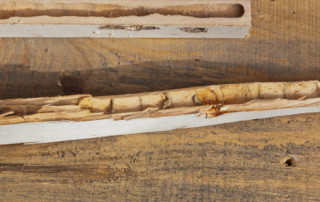
Carpenter Bees at Work in Home and Garden
Bees are smart. They recognize high quality food and habitat. The buzz has gone out that my house is a happening place for carpenter bees. I don't want to kill or drive carpenter bees away, I just don't want them messing with my house. Looking into their habits and life cycle gives clues to peaceful coexistence with carpenter bees.
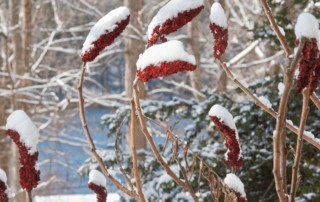
Ecologically Important Pest Dilemma
I love watching songbirds gobble down bugs and berries on the staghorn sumacs planted outside my front window and listening to owls whoo-ing nearby at night. But some wildlife - voles - have worn out their welcome by eating plants and tunneling through gardens. How do I establish self-sustaining wildlife-friendly plant communities when the wildlife keeps eating my plants? Voles and mice play an important role in ecosystems - but I want them out of my garden.
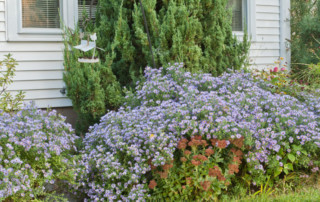
Plant Blue Asters that Last All Fall
Fall is aster time, and asters are one of the most important pollinator food sources. Nancy DuBrule-Clemente tells how to plant a succession of blue asters that will bloom in your garden from late summer right into November.
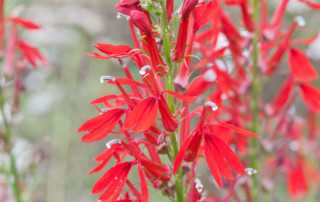
Is Your Yard a Refuge – Or a Trap – for Pollinators?
Sometimes our good intentions backfire. Scientific research, like insect-plant relationships, is highly specific. But researchers are beginning to fill in the dearth of data and come up with some pretty good clues to answer the big question: Are native plant cultivars - "nativars" - and hybrids good for pollinators and other beneficial insects?
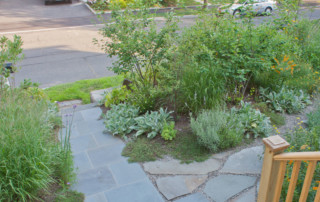
The Curb Appeal Trap
Who is curb appeal for? Why not appeal to wildlife and to your own sense of beauty instead of having a high maintenance cookie cutter suburban landscape?
Karen to Speak at The Ecological Landscape Alliance Season’s End Summit
The Ecological Landscape Alliance (ELA) has invited me to speak on Designing with Elegant and Edible Elements at its Season’s End Summit on November 7 at the Community Harvest Project in North Grafton, MA .......